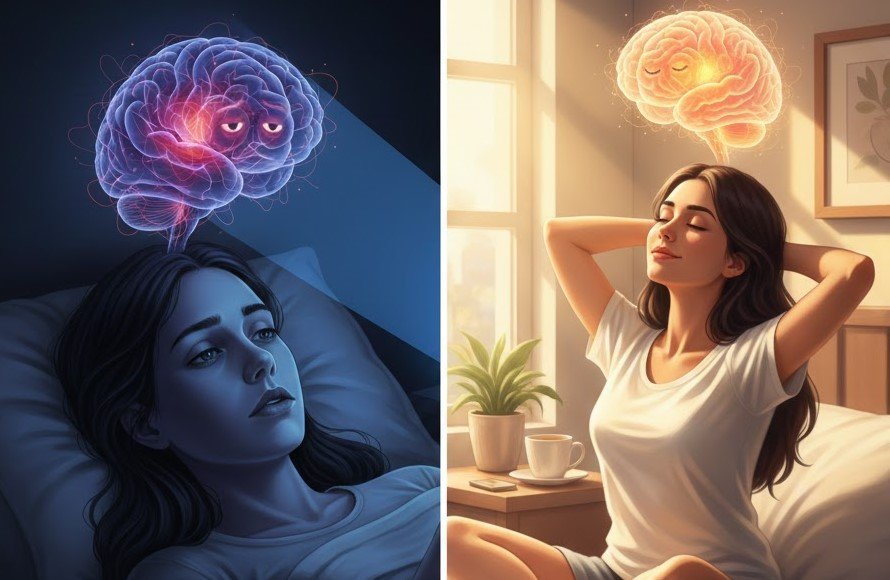

Most people assume real health changes take months or even years. But scientists suggest that some small habits can begin affecting the body in just seven days—often in ways people don’t expect.
This isn’t about extreme dieting or intense exercise. It’s about one simple daily habit change that many people overlook.
The Habit: Reducing Late-Night Screen Exposure
Health researchers studying sleep and recovery patterns have observed that limiting screen use before bedtime can trigger noticeable changes in the body within a week.
Screens emit blue light that interferes with the body’s natural sleep rhythm. When this exposure is reduced, the body begins to rebalance itself.
Day 1–2: Your Brain Starts to Calm Down
Within the first couple of days, many people report:
- Easier time falling asleep
- Fewer racing thoughts at night
- Slight improvement in morning energy
Scientists say this happens because the brain starts producing melatonin more naturally.
Day 3–4: Sleep Quality Improves
By mid-week, researchers have observed:
- Longer deep-sleep phases
- Reduced nighttime awakenings
- Improved focus during the day
This is when the body begins repairing itself more efficiently.
Day 5–6: Energy and Mood Shift
After several days, people often notice:
- More stable energy levels
- Reduced irritability
- Better emotional balance
Experts explain that consistent sleep allows stress hormones to stabilize.
Day 7: Subtle but Powerful Changes
By the seventh day, scientists suggest the body may show:
- Improved mental clarity
- Stronger immune response
- Better overall recovery
While changes may feel subtle, researchers say they can compound over time if the habit continues.
Why This Works So Quickly
The human body is highly responsive to rest. When the brain receives proper darkness and calm at night, it activates repair mechanisms that were previously suppressed.
This is why even a short break from late-night screen exposure can produce noticeable effects.
What Experts Recommend
Researchers advise:
- Avoid screens at least 60 minutes before sleep
- Use dim lighting in the evening
- Replace scrolling with calming activities like reading or meditation